
What to Bring for Your Asheville Elopement
What to Pack for a Mountain Elopement
Planning an elopement or wedding in the mountains is exciting, but the setting also calls for a little extra preparation. From sturdy shoes and layers to snacks and headlamps, having the right gear means you can focus on the experience instead of the logistics. Attire matters too—fabrics and designs that move easily, breathe well, and suit the season will make a big difference when you’re hiking a trail, catching the wind on a summit, or sharing a quiet moment in a forest clearing. This guide will walk you through what to bring so you stay comfortable, safe, and free to enjoy your day.

Wedding attire for mountain elopements
Choose wedding clothes that can actually move with you.
Wedding attire for an Asheville elopement or mountain wedding does not need to follow the usual rules. It should feel like you, look amazing, and still let you walk, hike, sit on a rock, step over roots, handle wind, and exist outside without feeling miserable.
Comfort is not a backup plan.
I’ve worked with a lot of couples in the mountains, and matching your attire to the season can make a huge difference. When you’re comfortable, you can actually enjoy the day instead of constantly adjusting, overheating, freezing, or worrying about every step.
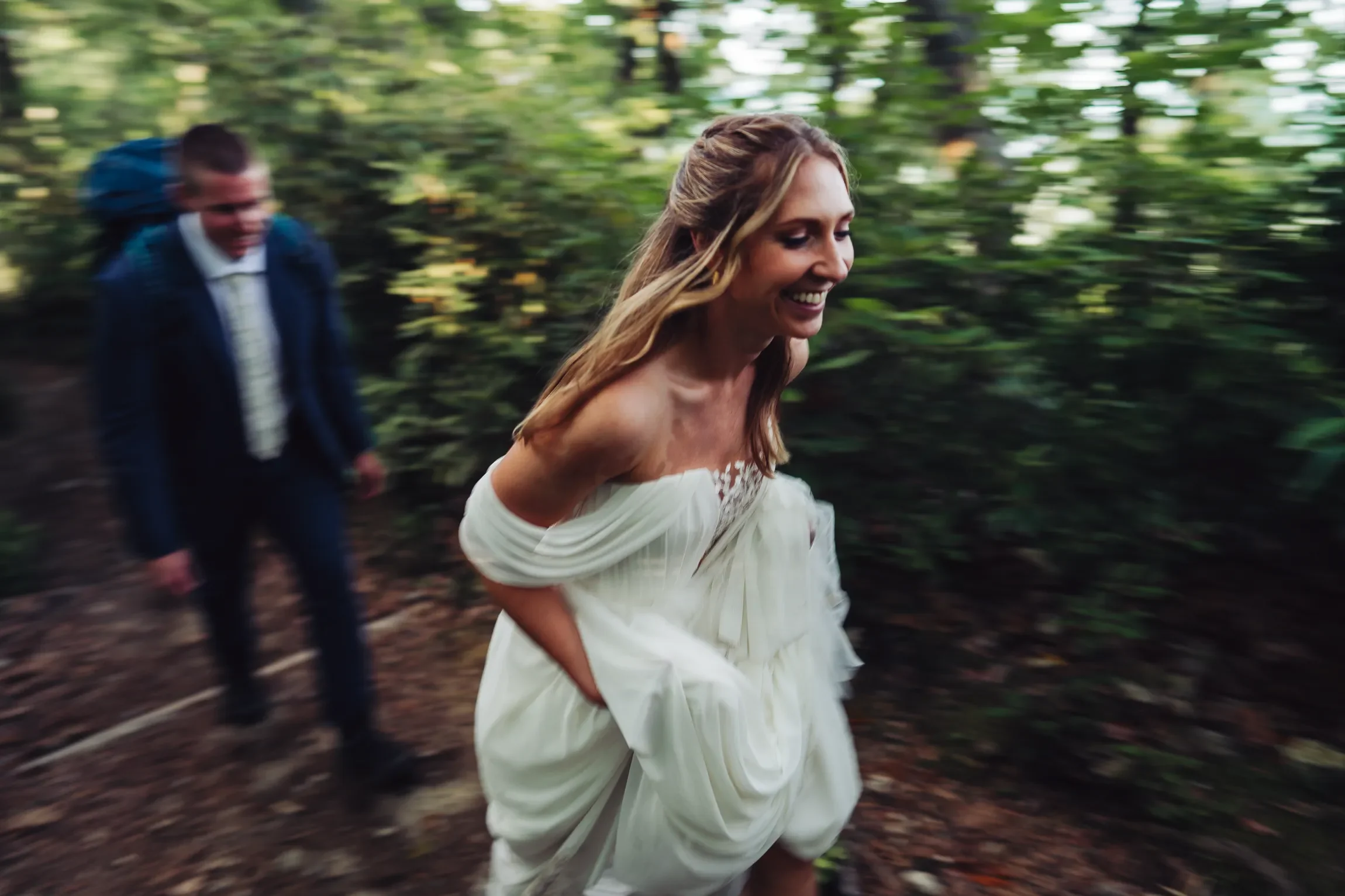
A dress that worked both ways.
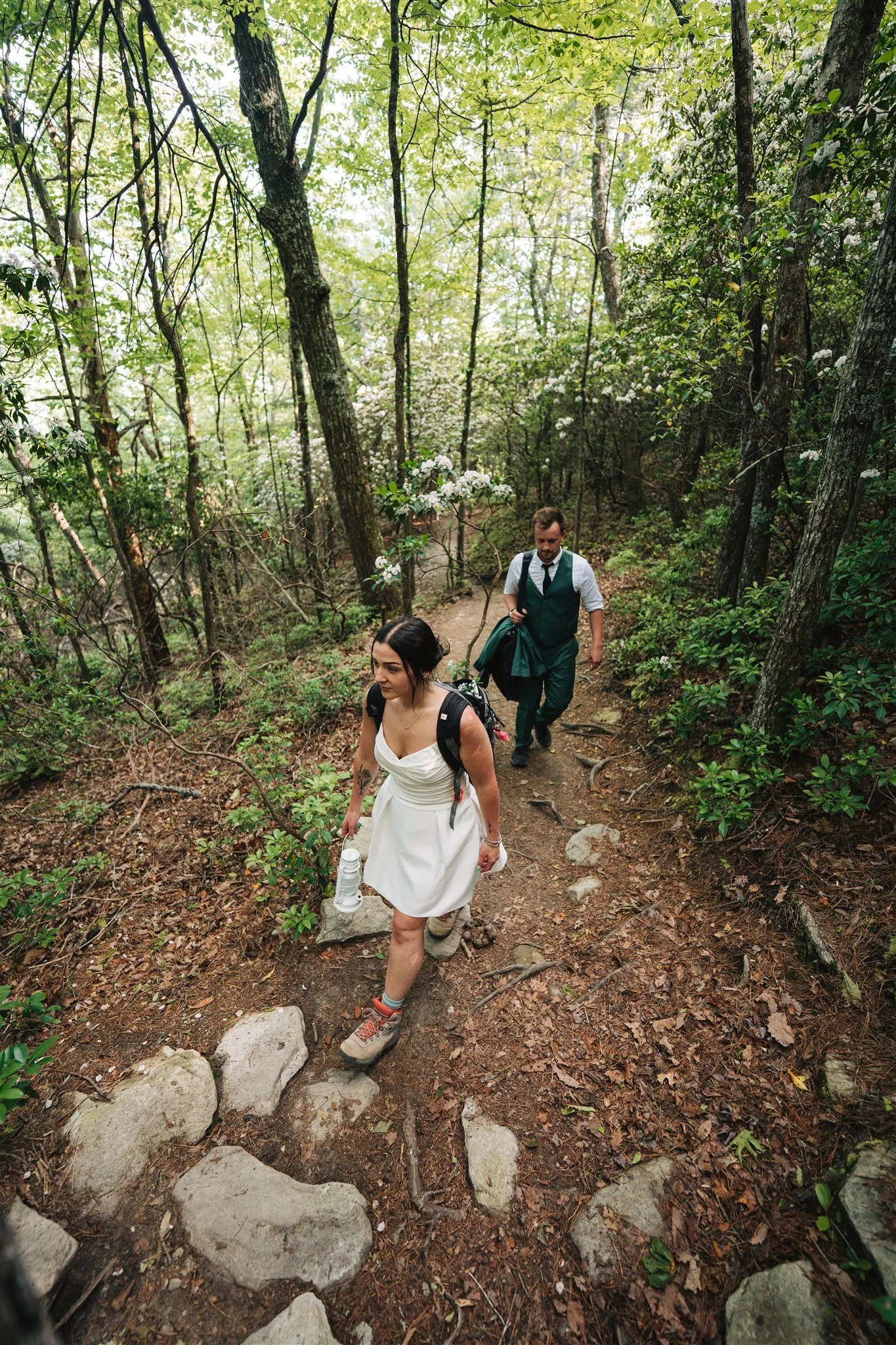
This is a good example of wedding attire that still felt beautiful, but also made sense for a real mountain day. One look for the ceremony and portraits, another that made it easier to move around outside.
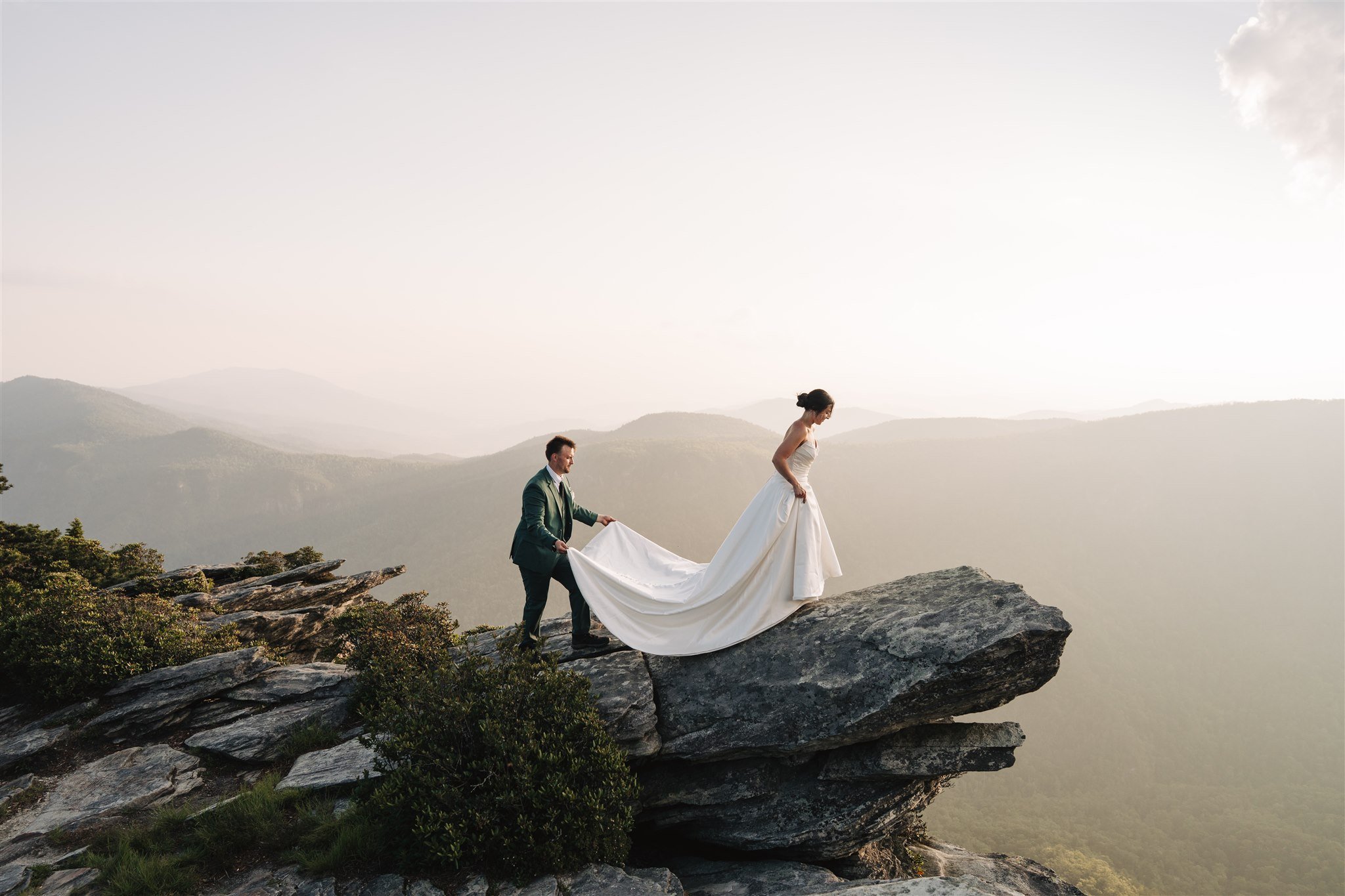
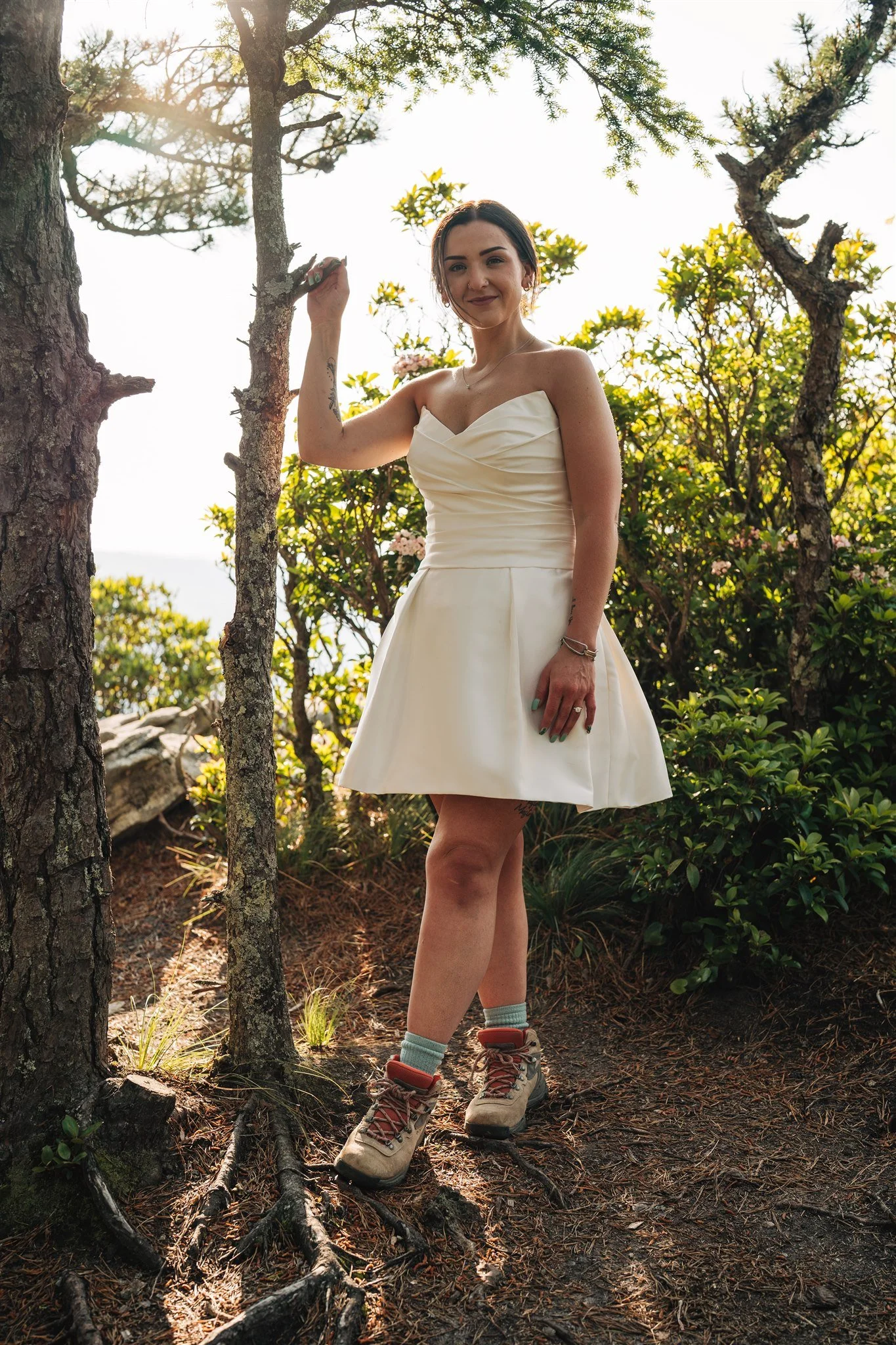
Look good, feel good, move around like yourself.
That’s the whole idea. You want wedding attire that photographs beautifully, but also lets you be present. The point is not to dress like you’re going to a gear catalog. The point is to choose clothes that work with the mountains instead of fighting them all day.
Rain gear for outdoor weddings
Rain happens. Bring the stuff that keeps it from becoming a whole thing.
Rain happens, so prepare for your wedding day by bringing the following along just in case. You can always leave it in the car if we know for sure it won't rain, or won't rain much.
Mountain weather around Asheville, Pisgah, DuPont, the Blue Ridge Parkway, and Linville Gorge can shift fast, so it’s worth having a few things packed and ready.
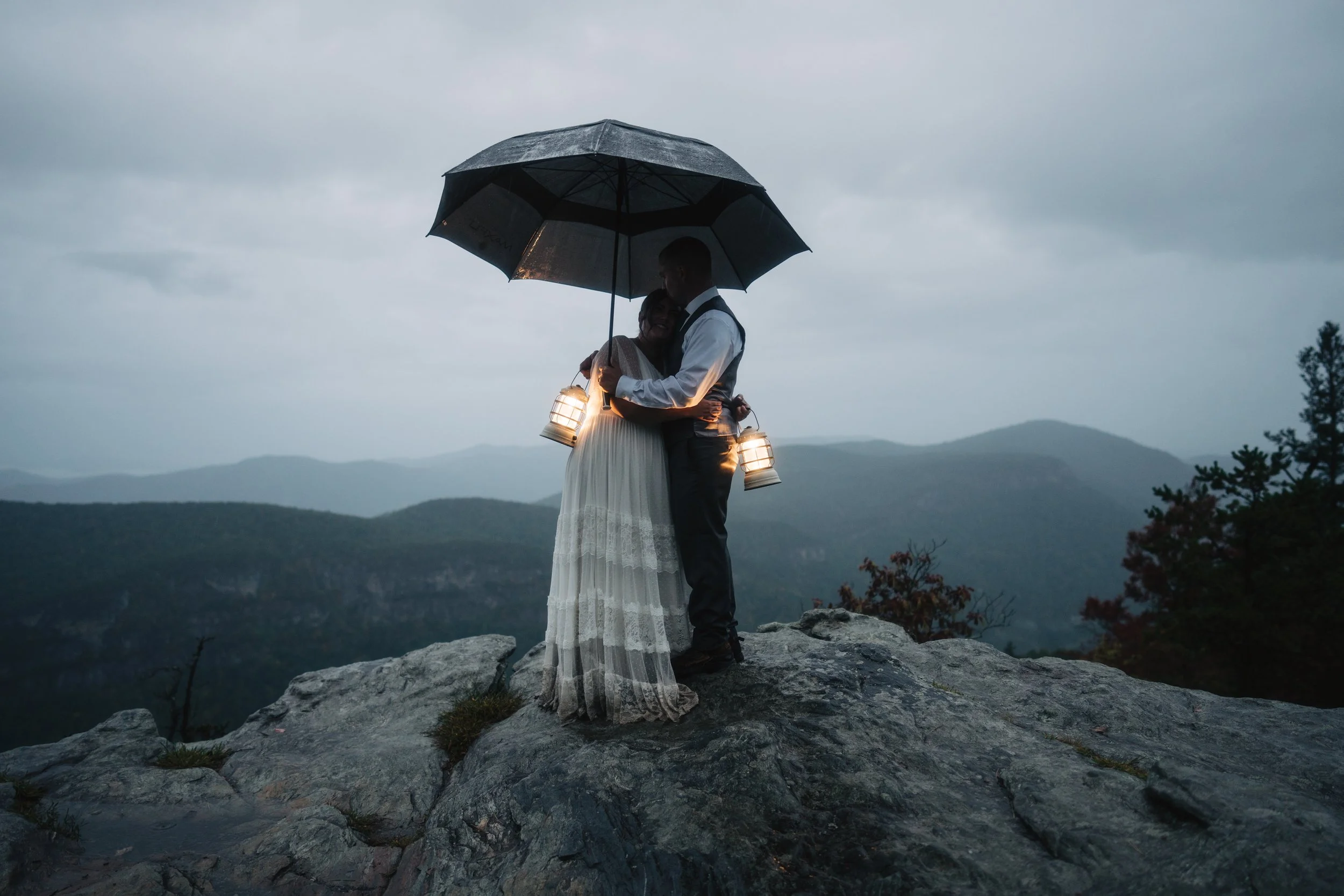
Rain jacket
Bring a rain jacket or shell that actually sheds water. It does not need to be fancy. It just needs to keep you dry if we’re moving between locations, waiting out a quick shower, or hiking back in damp conditions.
Clear umbrellas
Clear umbrellas can be found on Amazon, Target, Belk, Walmart, and similar places. They’re great to have because they work well in photos and still let light through.
Waterproof hiking shoes
Wet feet can make a mountain wedding feel a lot less fun. Waterproof hiking shoes or boots are especially helpful if we’re walking through damp grass, muddy trail sections, puddles, or post-rain forest paths.
Vibram-soled shoes, or similar
Get some shoes or boots that you can easily move in, but also confidently step on wet roots and rocks. Trust me, it will be way more comfortable.
Best case, this stuff stays in the car. But if the weather turns, having it nearby can keep the day comfortable, safe, and a lot less stressful.
Backpacks + packing wedding clothes
Bring a backpack that makes the day easier.
For an Asheville elopement or mountain wedding, your backpack is basically your tiny mobile wedding closet. It needs to carry the important stuff, keep things organized, and still feel comfortable on the trail.
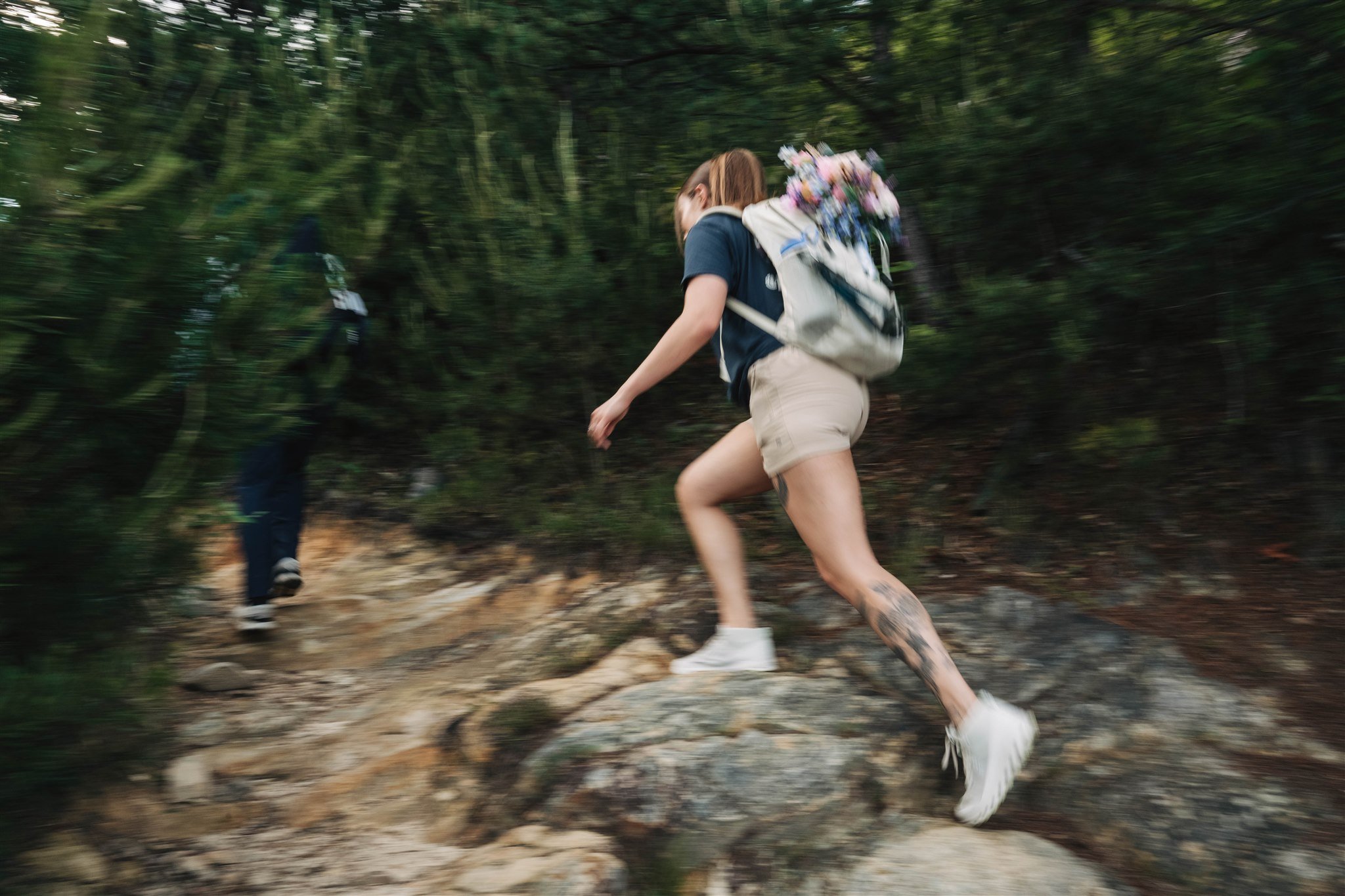
What to look for
- Comfortable shoulder straps
- Water-resistant fabric or a rain cover
- Room for layers, water, snacks, and wedding clothes
- Hydration pouch or easy bottle access
- Breathable back panel if it’s warm
- Suitcase-style opening if you’re packing formalwear
Pack setup
One larger pack or two medium packs both work.
Splitting the weight usually feels better if we’re hiking with water, layers, vows, rings, snacks, and outfit changes.
Formalwear
Give wedding clothes room.
If you’re changing at the summit, a backpack that opens like luggage makes packing easier and helps keep clothes from getting crushed.
Suit tips
Fold it. Don’t roll it.
Fold the jacket and pants separately if you can. Soft material between layers can help reduce wrinkles, and a travel-size wrinkle release spray can be worth bringing.
No bag?
No garment bag? Turn the jacket inside out.
Carefully pop the shoulders inward and fold the jacket in half so the lapels touch. The lining helps protect the outside fabric while it’s packed.
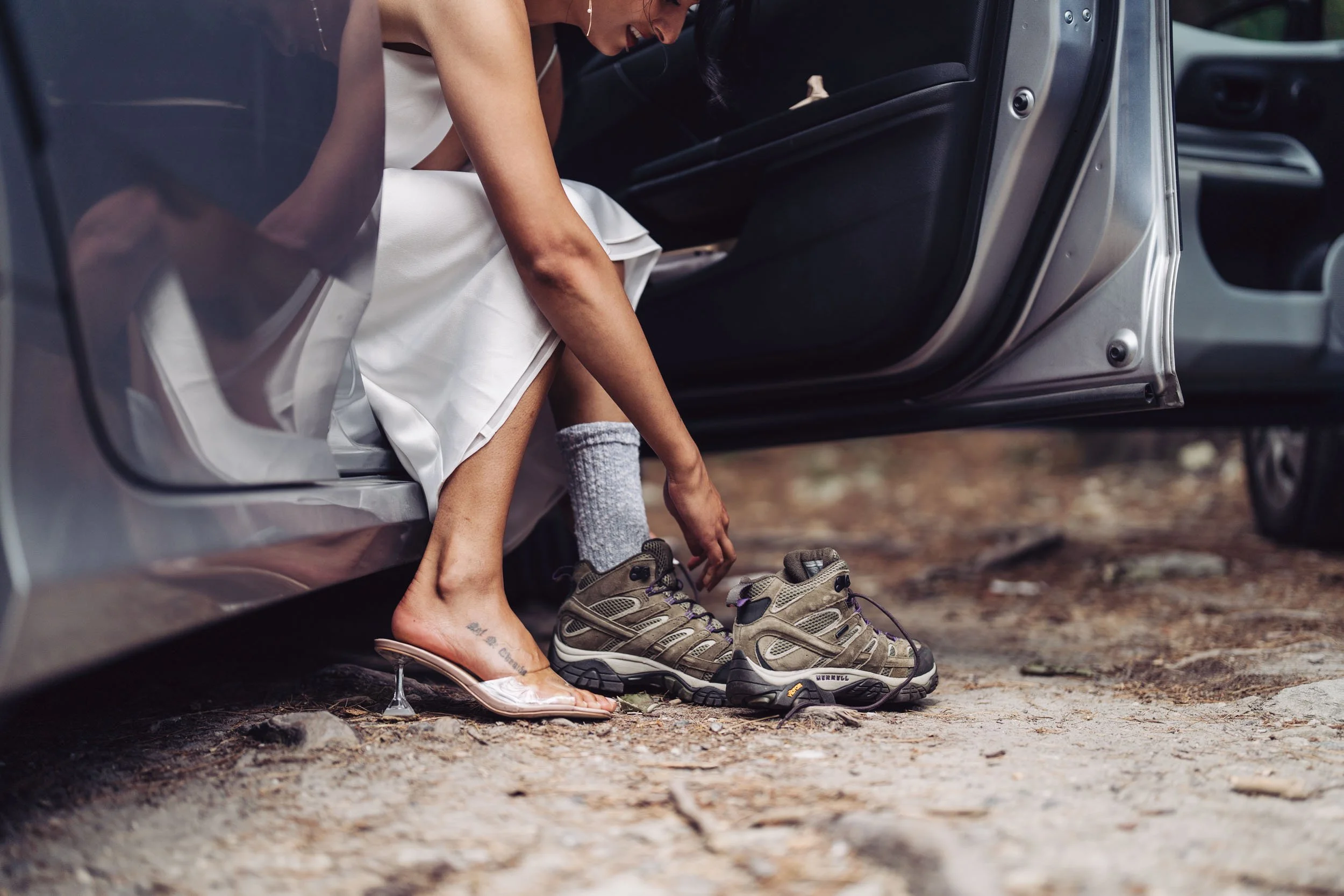
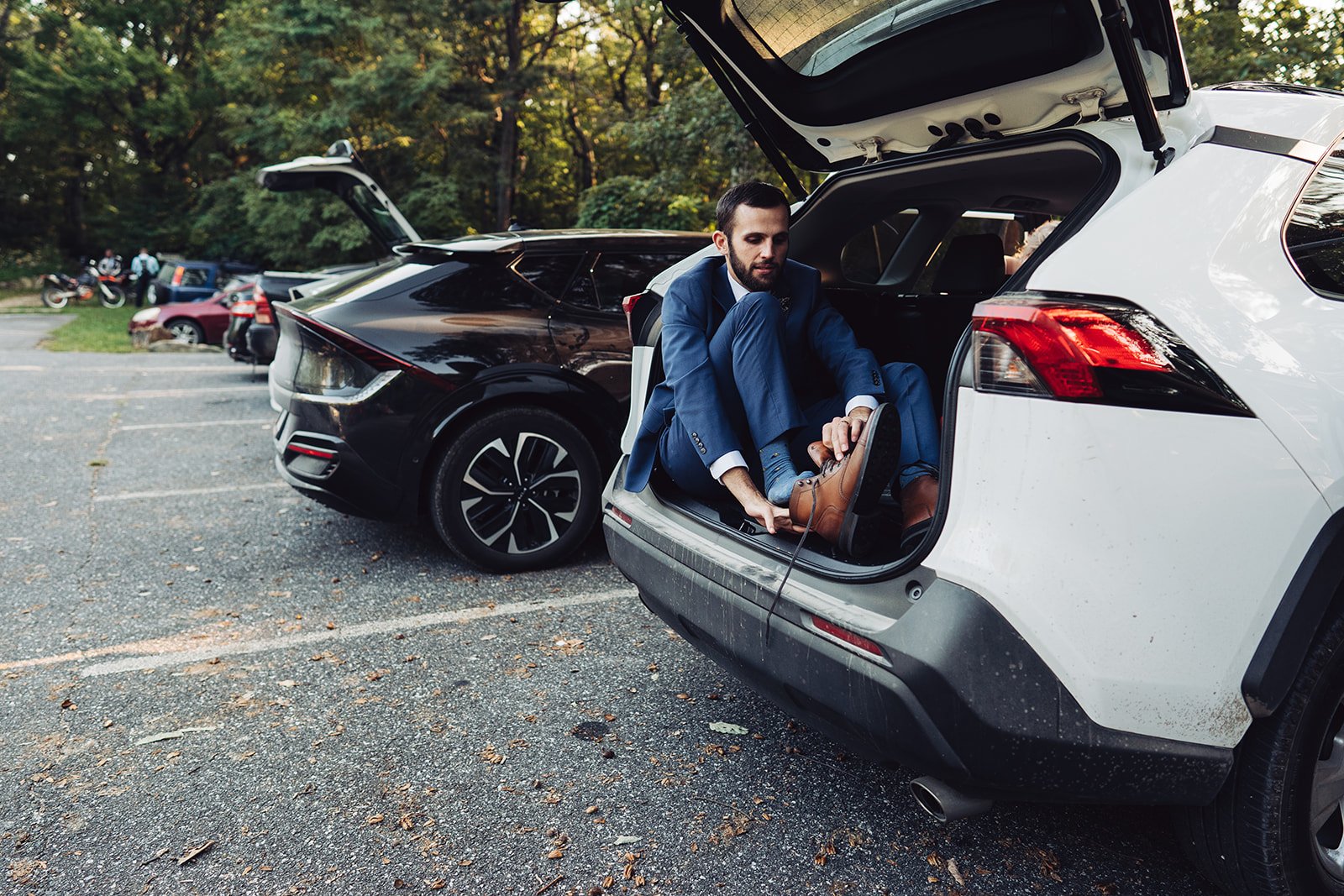
A quick note on fancy dress shoes.
I usually recommend leaving fancy dress shoes at home for an adventure elopement. They’re often uncomfortable on trails, add weight, take up backpack space, and can feel a little too formal once you’re standing in the mountains.
Boots, trail shoes, or something with real traction usually make more sense. But if you’re jazzed about the shoes, bring them — just pack them low in the bag and place softer clothing above them.
Layers for mountain weather
Pack layers, even when the forecast seems fine.
In my experience, mountain weather can be notoriously difficult to predict more than a day or two in advance. For that reason, it’s a good idea to know the season and dress appropriately for the area.
That means in spring, fall, winter — and sometimes even summer — pack a windbreaker or other layers. Asheville might feel warm, but a shady trail, windy overlook, or higher elevation can feel totally different.
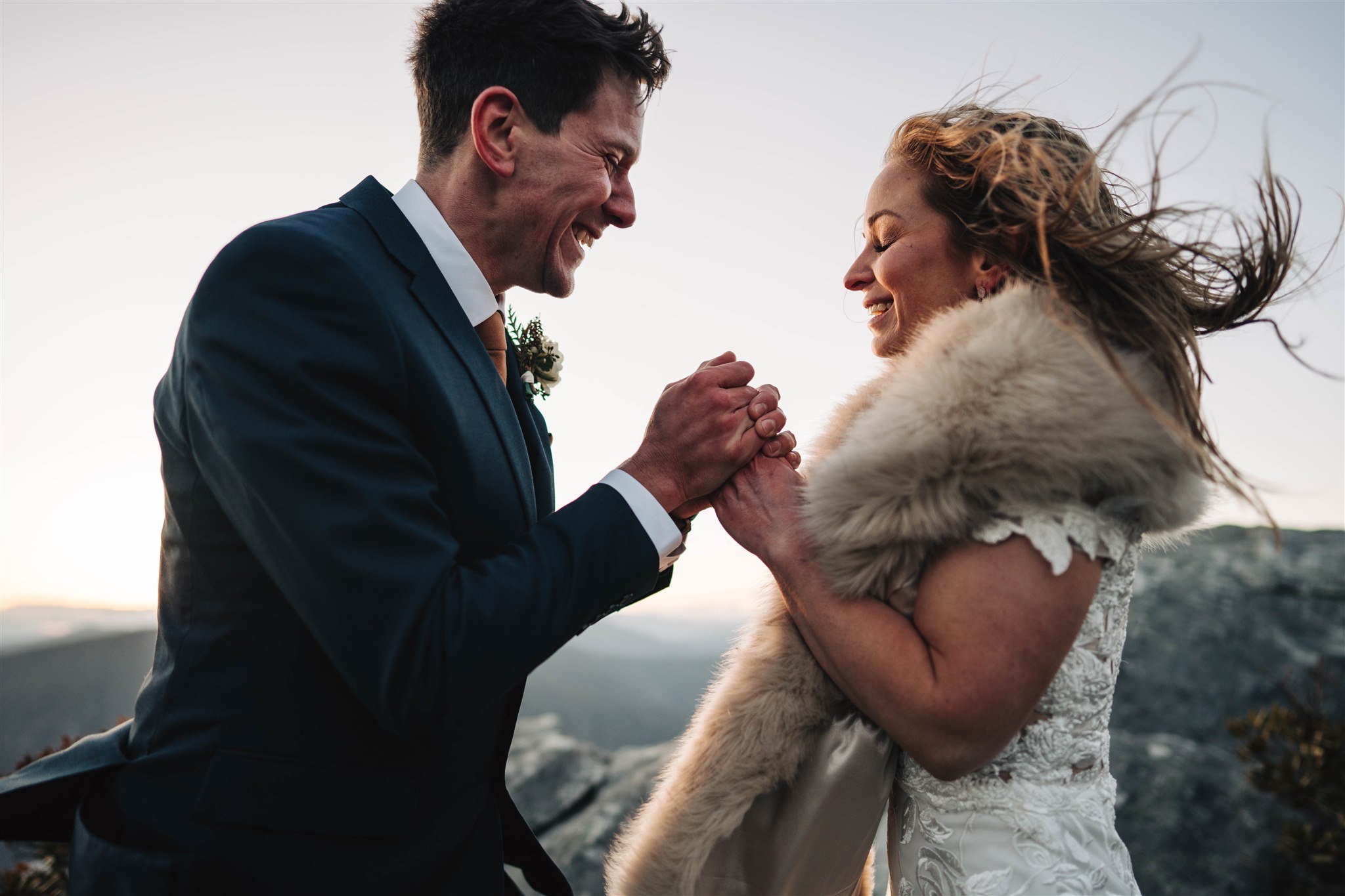
When in doubt, bring the extra layer.
It’s much easier to take a jacket off than to wish you had packed one. A small layer can make a huge difference if the temperature drops or the wind picks up.
Wind
Bring a windbreaker or outer layer.
Especially for exposed overlooks, ridgelines, and cooler seasons.
Hands
Gloves are nice to have.
If it gets windy or cold, a simple pair of gloves can make the day way more comfortable.
Ears
Ear muffs work surprisingly well.
They keep your ears warm while still being a little friendlier to hair than a bulky hat.
Spring
Looks mild on paper, but weather can swing fast. Bring a layer anyway.
Fall
Beautiful and often windy. A jacket or warm layer usually makes sense.
Winter
Definitely layer up. Wind protection, warm hands, and warm ears go a long way.
Hydration for hiking elopements
Bring more water than you think you’ll need.
Depending on the length of your day in the mountains, always pack water or other hydrating fluids. This matters even more if we’re hiking, changing locations, spending a lot of time in the sun, or carrying wedding clothes and gear.
Staying hydrated is one of those boring-sounding things that makes the whole day feel better. Warm hikes, exposed trails, and long timelines can sneak up on you fast.
A good starting point
For shorter outings, a few 32-ounce bottles or hydration bags per person may be plenty. If we’re out for several hours and won’t be back at the car, plan more carefully.
A common hiking recommendation is roughly one liter of water per hour, per person. If it’s especially warm, humid, exposed, or strenuous, bring more.
Hydration bladders
CamelBak-style water bladders are great for elopement days. They fit into most hiking packs, make it easy to drink while moving, and pack down when they’re empty.
Water bottles
Bottles work well too, especially if we’re changing locations and can top off between trailheads. A couple of 32-ounce bottles per person is a solid place to start for many shorter plans.
Electrolytes
Brands like Nuun make electrolyte tablets that can be added to bottles or hydration packs. They’re especially helpful on warm hikes when you’re sweating more than expected.
Between trailheads
If we’re driving between locations, use that time to drink water, refill bottles, and top yourself off before the next trail or overlook.
Tiny geyser warning
If you use electrolyte tablets in a bottle with a straw or pressure-style lid, leave it open until the tablet dissolves. Otherwise it can build pressure and turn into a tiny geyser in your car. How do I know? I have absolutely forgotten this part before.
Food for your elopement day
Snacks are part of the plan. Not an afterthought.
Beyond drinking plenty of fluids, getting enough calories throughout the day is a big part of staying comfortable, energized, and generally pleasant to be around while you’re getting married in the mountains.
Wedding days can be strange for food. You’re excited, moving around, maybe hiking, maybe changing locations, and suddenly it’s been four hours since anyone ate anything besides one emergency granola bar.
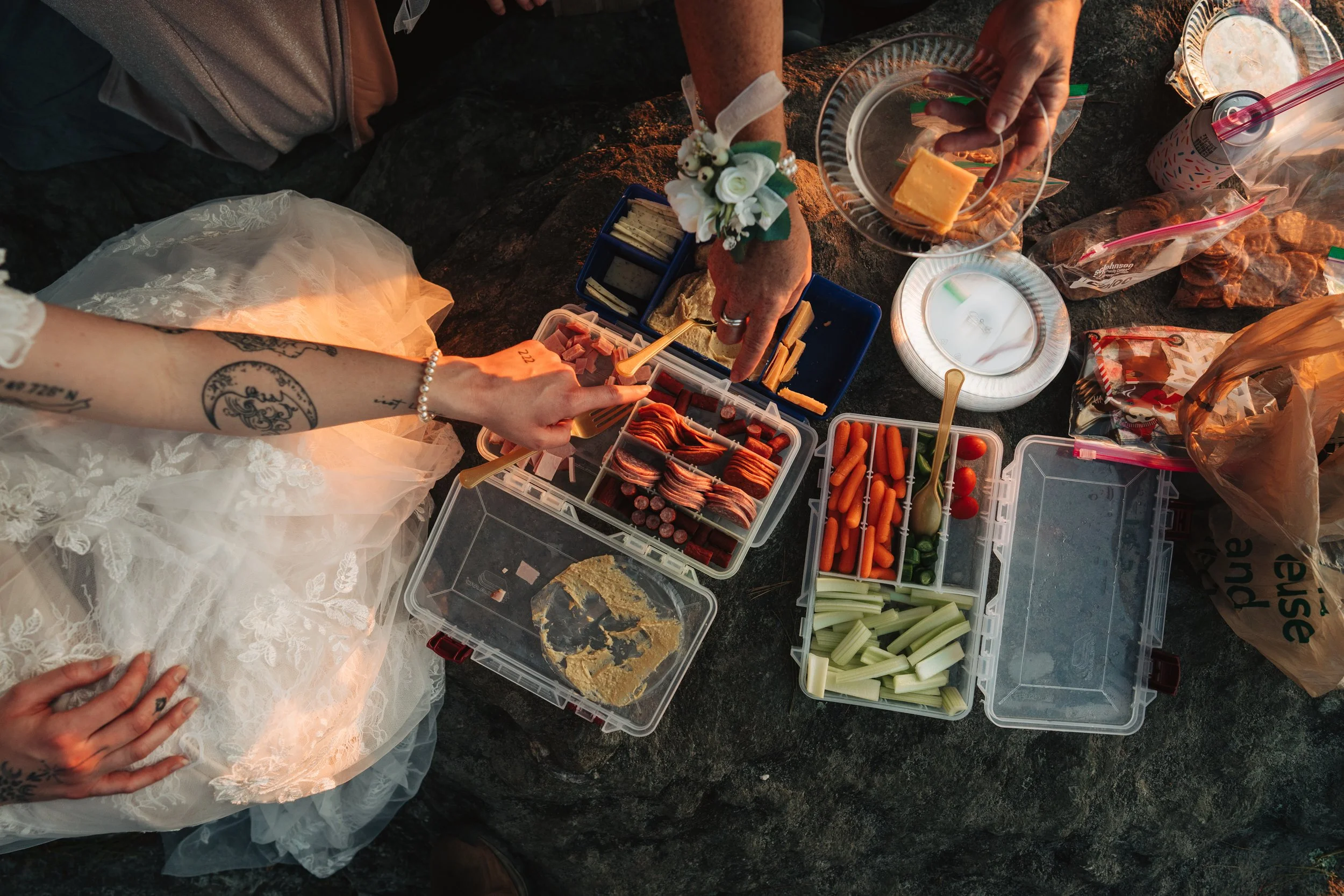
Protect the food you don’t want smashed.
If you’re packing lunch items, desserts, or anything you’d rather not have crushed in your backpack, consider using a small packable box or a hard-sided container. Literally something like a tackle box can work well for keeping food organized and intact.
If the container is insulated, even better. Otherwise, cooler bags, ice packs, and small insulated containers can help keep food cold during multi-location days in the mountains.
Easy things to bring
- Bars or trail snacks
- Fruit or salty snacks
- Trail mix
- Bread, olives, or cheese
- Cured meats
- Favorite vegetarian or vegan options
- Ice packs for cold items
- Small insulated container or cooler bag
- Packable hard-sided box for food
- Small cooler bag for multi-location days
The goal is simple: bring enough food that you don’t hit the ceremony, hike, or sunset portraits running on fumes. Hungry people make worse trail decisions and have less fun. Very scientific.
Lighting for sunrise + sunset hikes
Bring a light source that does more than look cute.
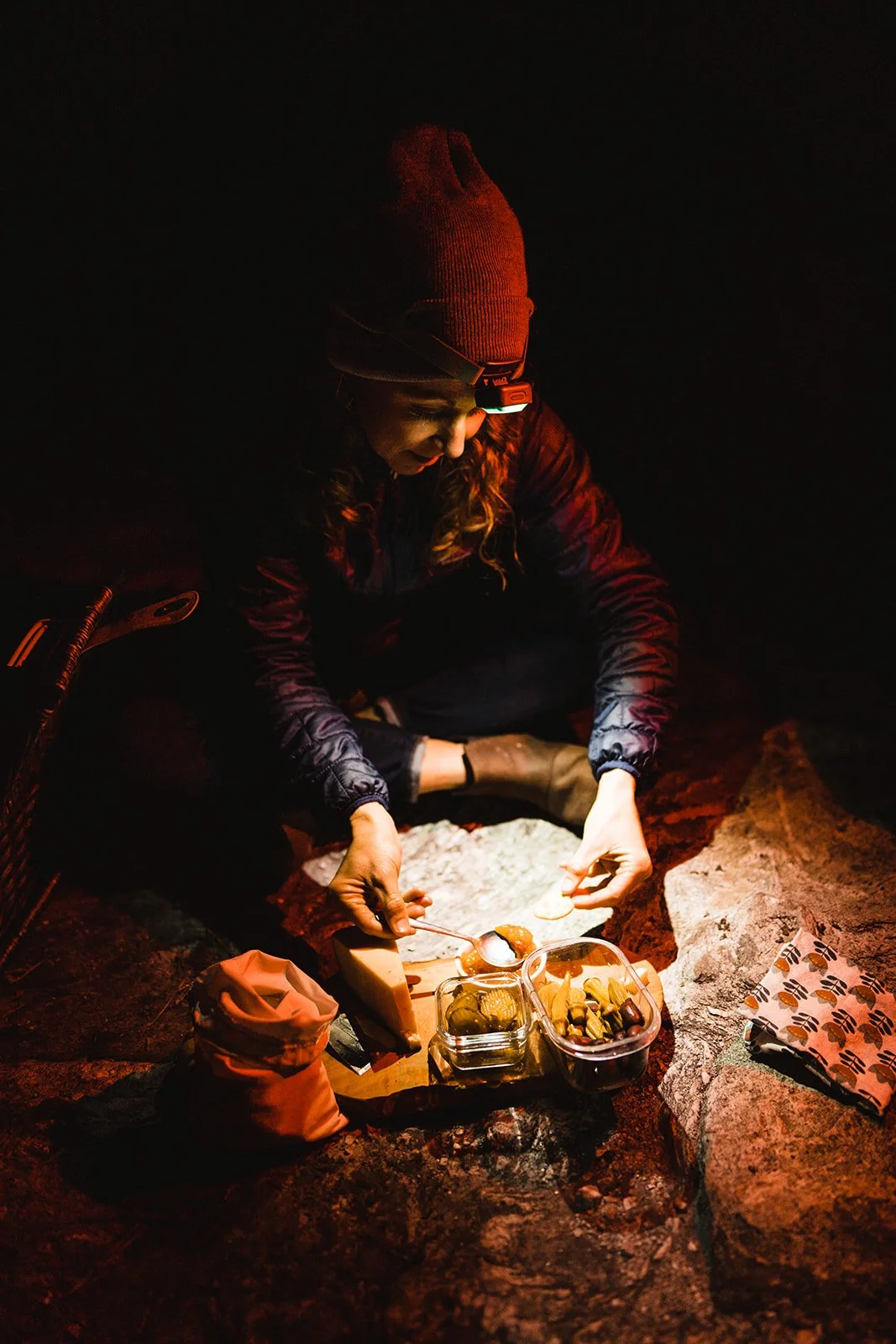
If we’re hiking in before sunrise or heading out after sunset, lighting matters. It keeps the day safer, easier, and a whole lot less “wait, is that a root or a snake?” after dark.
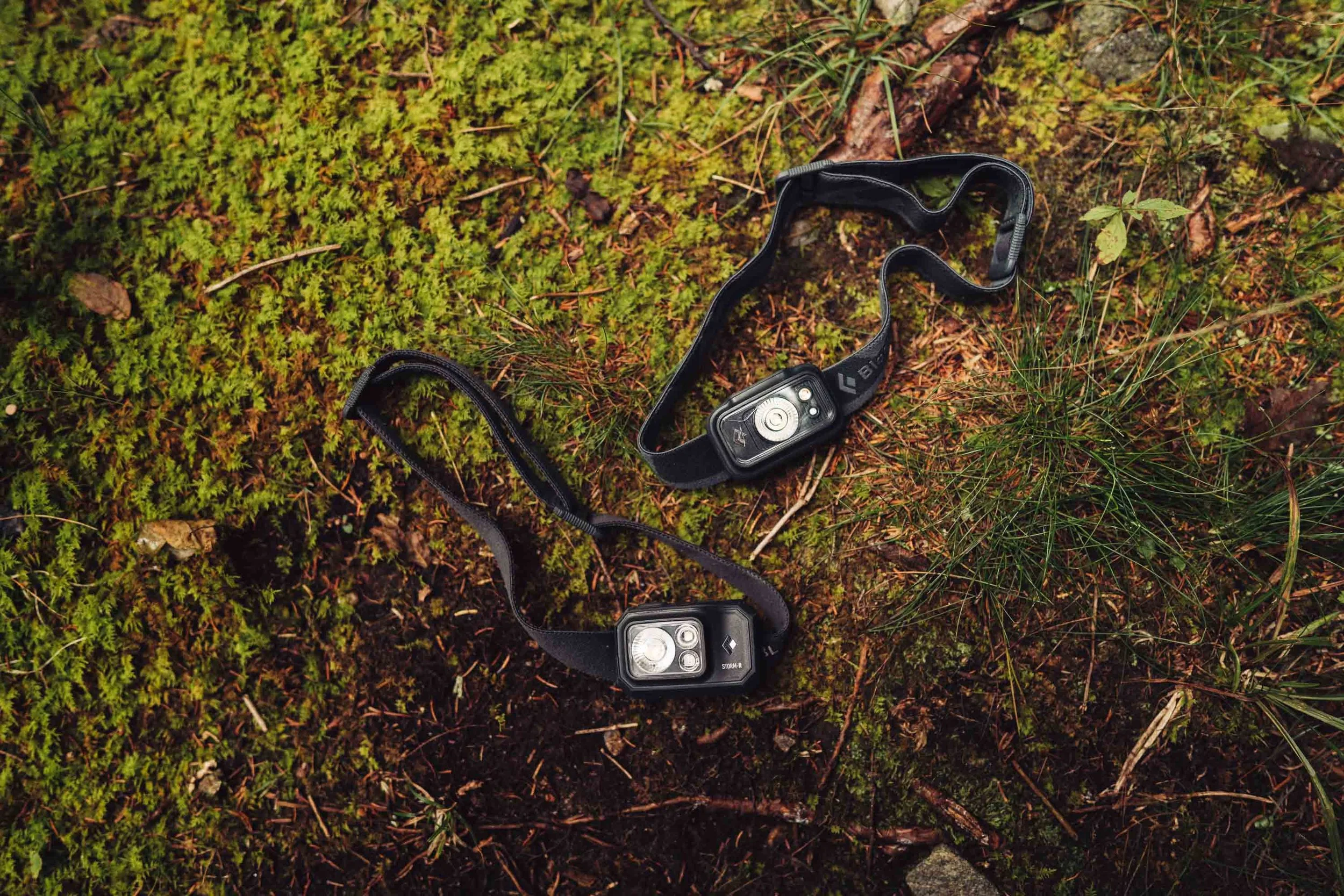
Headlamps
Headlamps are super nice to have for hiking out after sunset or hiking in before sunrise. They keep your hands free, which helps if you’re carrying flowers, clothes, snacks, or each other’s stuff.
They also make hiking safer if the trail is slippery, uneven, rocky, or just generally being a mountain trail.
- Look at brands like Petzl, Black Diamond, or similar outdoor brands.
- Rechargeable internal batteries are great.
- Bonus points if they can charge in the car between locations.
Lanterns
Lanterns can be really useful around cars, cabins, picnic setups, or post-sunset moments when you want a little extra light without blasting everyone with a headlamp.
I recommend warm lights around 2000–2200K. Some Barebones Living lanterns and similar styles look nice, work well, and don’t feel like you brought a construction floodlight to your wedding.
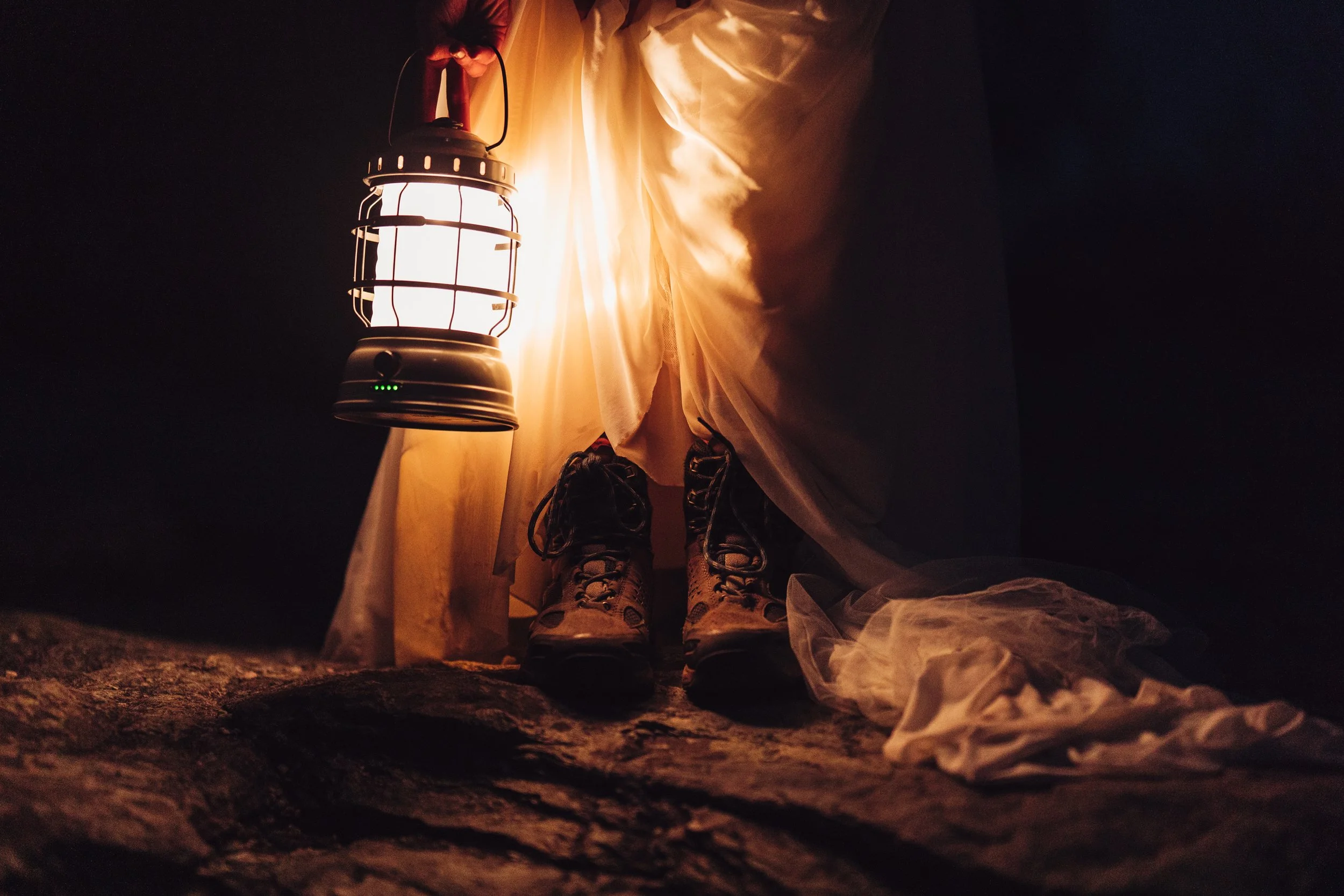
Tiny lighting note: warm lanterns look much better in photos than harsh, blue-white light. Headlamps are for moving safely. Warm lanterns are for making the end of the day feel less like a parking lot.
The fun stuff
Bring a few things that feel like you.
This part is optional, but it can make the day feel more personal and give the photos a little more story. You do not need props. You do not need to overthink it. Just bring the things that actually mean something.
Keepsakes + personal touches
Photos, letters, objects, and meaningful little things.
If there’s anything uniquely “you” that you want included in the day, bring it along. Photos, keepsakes, family items, small mementos, or anything that helps mark the day in a way that feels personal.
This is not a must-bring. But when it fits, that extra bit of personal touch can be pretty amazing.
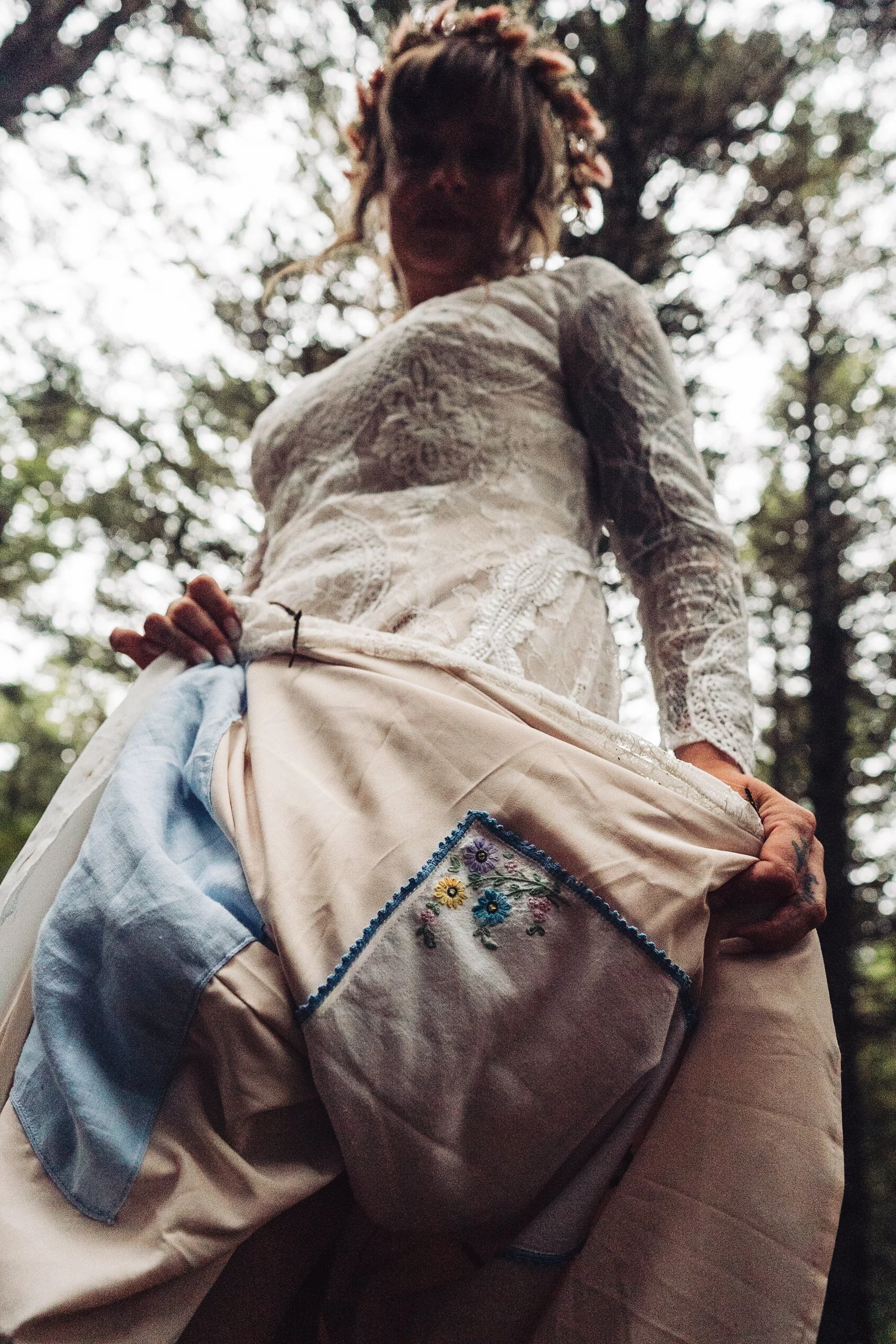
The best details are usually the ones that already mean something to you.
Celebratory drinks
Champagne, San Pellegrino, or whatever you two actually like.
Popping champagne or sparkling water can look awesome in photos, but it’s even better when it’s something you both actually want to enjoy.
Add a personal touch by bringing something you’ve had before and both love. Fancy is fine. Familiar is usually better.
Flowers + details
Flowers give your hands something to do. Honestly, helpful.
Consider bringing flowers from a local florist, or checking my preferred vendor page for local options. Flowers look great in photos and give you something natural to hold, carry, set down, or use throughout the day.
Synthetic flowers can also work surprisingly well. Silk, wood, and other realistic options from companies like Afloral can take the pressure off keeping flowers from getting damaged, wilted, or sad-looking during a longer mountain day.
Think of these as small story pieces, not a shopping list. The right detail can make the day feel more grounded, more personal, and a little more like the two of you.
Directions, guests + vehicles
The mountain version of “leave a little early.”
A beautiful elopement location can still be a little annoying to reach if the directions are vague, cell service disappears, someone needs gas, or a car is not up for the road. A little prep here keeps the day from getting weird.
Directions
Save the exact location before you go.
Make sure you have the coordinates or exact address for the trailhead and any other locations you’re visiting. Do not rely only on cell service.
Download the map directions to your phone ahead of time so you’re covered if reception gets spotty, which it absolutely can in the mountains.
Guests
Make sure guests have the plan too.
If you’re including guests, make sure anyone driving along has the directions saved to their device as well. Send them the important details ahead of time so they show up as prepared as you are.
That includes timing, footwear, weather notes, road conditions, and anything else that could affect their comfort or ability to get there safely.
Vehicles
Make sure the car matches the road.
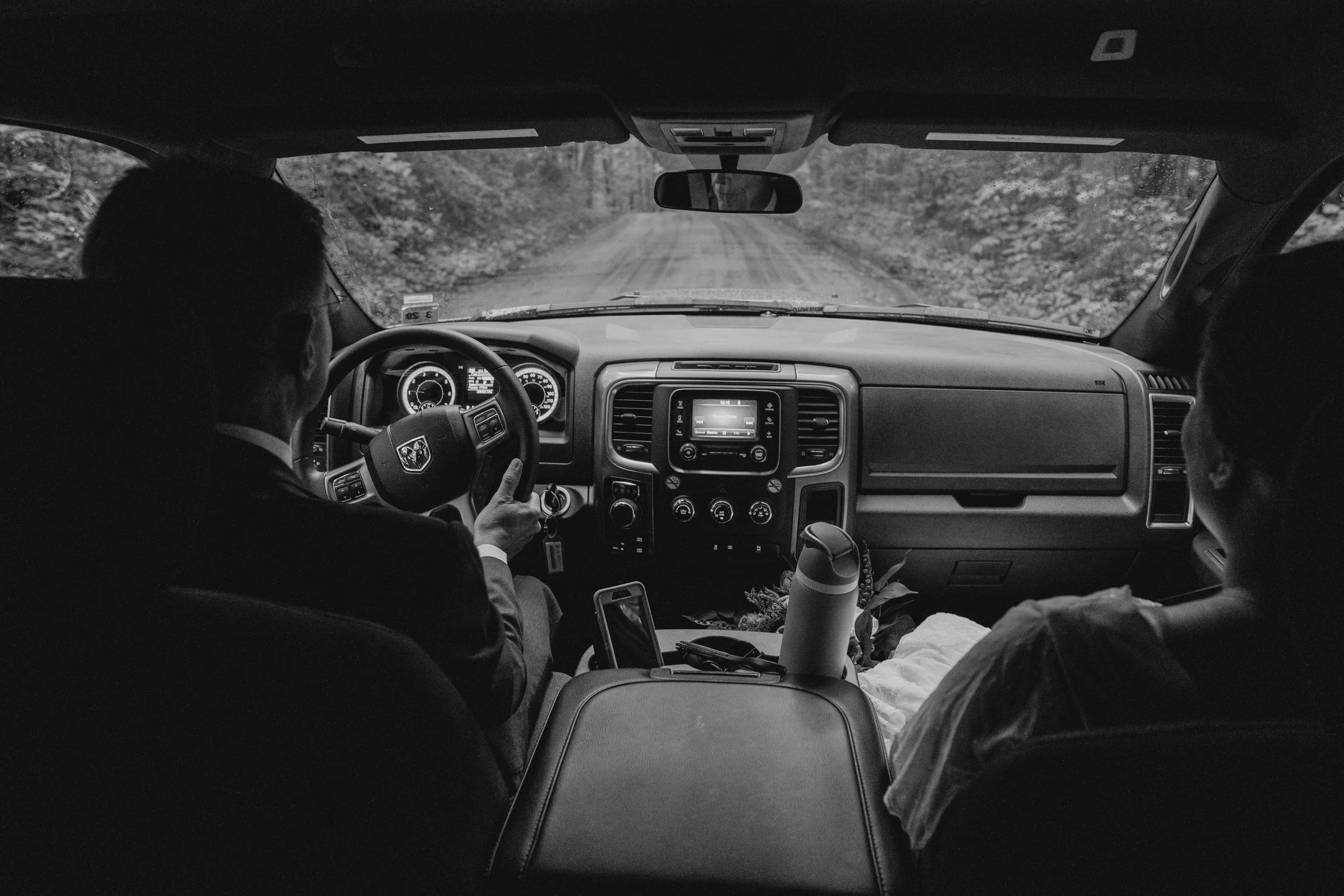
Some mountain roads are easy. Some are gravel, rough, narrow, steep, or just not great for every vehicle. If your car is not a good fit for the location, consider renting something that can handle the road comfortably.
Fill the tank.
Make sure any vehicles joining us have filled gas tanks or topped-off batteries the night before. Same goes for tire pressure, basic car stuff, and anything else you do not want to deal with on the way to a trailhead.
Small delays can mess with good light.
Unexpected stops, like hunting for a gas station in a rural area, can create unscheduled delays and affect the timeline.
Arrive with that task completed. Future you, standing in pretty light instead of a gas station parking lot, will be grateful.
Small extras worth packing
A few little things that can save the day.
These are not all required, but they’re small, useful, and easy to forget. Tossing a few of them into your backpack can make the day smoother, especially if we’re hiking, changing locations, sitting on the ground, or spending several hours outside.
This is the kind of stuff that does not feel important until someone has wet socks, windblown hair, a dusty dress hem, a sunburn, or a snack wrapper with nowhere to go.

- Small first-aid kit
- Extra socks
- Small trash bag for wrappers or garbage
- Small towel or rag
- Small mirror
- Extra hair ties
- Sunglasses
- Sunscreen
- Portable fan
- Foldable hiking poles
- Blanket to sit on
For comfort
Extra socks, sunscreen, sunglasses, a portable fan, and a blanket can make a surprisingly big difference, especially on warm days, long timelines, or locations where we’ll be sitting, hiking, or waiting for the light to get good.
For cleanup
A small trash bag and towel or rag are simple but useful. They’re great for snack wrappers, damp gear, muddy shoes, dusty hems, sweaty faces, or the random little messes that happen when you’re getting married outside.
Planning an Asheville elopement?
You don’t have to figure all of this out alone.
If you landed here from a Google search, hey — I’m Andy. I photograph elopements and small weddings around Asheville, Western North Carolina, and the Blue Ridge Mountains, and a big part of my job is helping couples feel prepared without turning the day into a complicated production.
I help with location ideas, timeline planning, light, weather, trail logistics, backup plans, and all the small mountain-specific things that make the day feel smoother. The photos matter, obviously. But the experience matters too.
If you’re planning something outdoors, intentional, a little outside the usual wedding script, and you want someone who knows how these days actually work in the mountains, I’d love to hear what you’re dreaming up.