
Asheville Elopement Planning
How to Avoid Crowds at Asheville Elopement Locations
Practical ways to find more privacy in the mountains by choosing the right day, time, season, location, and backup plan for your Asheville elopement.

Start With the Experience
Privacy Is Something You Plan For
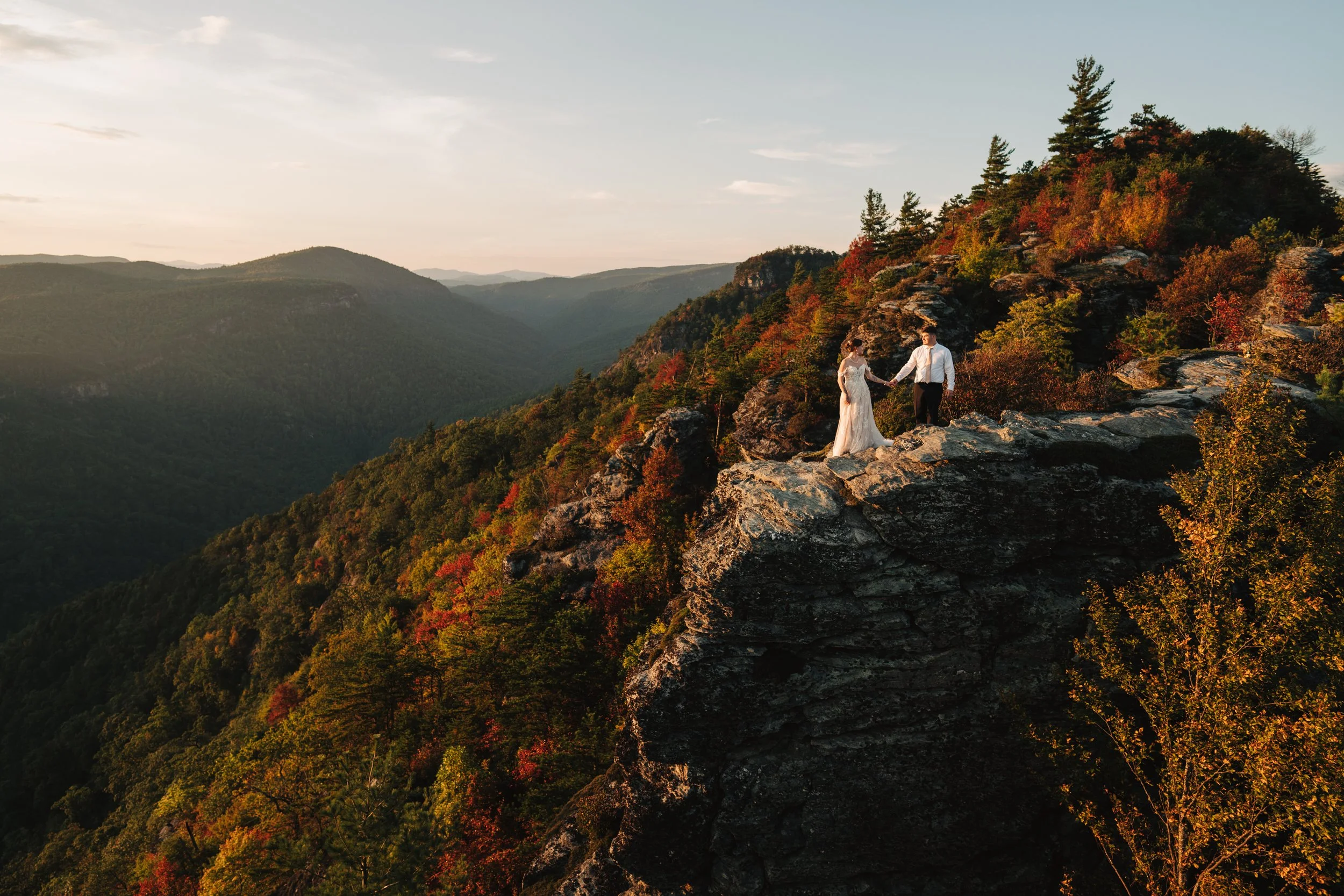
Wanting a quiet place to exchange vows in the mountains is completely reasonable. Expecting one of Asheville’s most popular overlooks to be empty at sunset on a Saturday in October is probably a different story.
The good news is that avoiding crowds usually does not require finding some secret location nobody else knows about. Most of the time, it comes from stacking a few smart decisions together: choosing the right day, starting earlier or later than everyone else, considering the season, being willing to walk a little farther, and keeping some flexibility in the plan.
I talk through those decisions with couples because the location is only one part of the equation. The exact same overlook can feel peaceful on a weekday morning and completely different on a fall weekend when the parking area is full and people are arriving every few minutes.
Public land is still public, so I never promise that another person will not show up. What I can do is help build a day that gives us much better odds of finding some breathing room—and have another option ready if a place feels busier than expected.
If you are still working through the bigger picture, my Asheville Elopement Guide covers seasons, locations, permits, marriage licenses, and the other pieces that go into planning a mountain elopement here.
Day of the Week
Weekdays Make a Bigger Difference Than You Think
If having some privacy matters to you, choosing a weekday is one of the easiest ways to improve the odds before we even start talking about specific locations.
Saturdays and Sundays naturally bring more hikers, tourists, families, photographers, and other couples into the mountains. That difference becomes even more noticeable during peak fall color, holiday weekends, and warm-weather months when everyone wants to be outside.
A place that feels packed on a Saturday evening can feel completely different on a Tuesday or Wednesday. Parking is usually easier, trails tend to have more breathing room, and we have more flexibility to move around instead of waiting for one small overlook to clear.
This does not mean every weekday will be empty. Popular places are popular for a reason, and Asheville gets visitors throughout the week. But if privacy is high on your priority list, moving the celebration away from the weekend is one of the strongest choices you can make.
A Good Starting Point
When couples have flexibility, I usually prefer Tuesday through Thursday for mountain elopements. It gives us a better chance of quieter trails without asking you to plan the entire day around avoiding other people.
Time of Day
Sunrise and Sunset Can Feel Like Two Different Locations
Timing can change the experience almost as much as choosing a different trail. Most visitors naturally gravitate toward the mountains later in the day, especially when a location is known for sunset.
Sunrise usually gives us better odds of finding a popular overlook quiet. Parking can be easier, trails are often calmer, and there is something pretty great about having the rest of the day ahead of you once the early part of the adventure is finished.
But I do not automatically push every couple toward sunrise. An early start can mean getting ready in the dark, driving mountain roads before dawn, and waking up several hours earlier than you normally would. If that sounds miserable, it probably is not the right answer for your elopement.
Sunset can still work beautifully. We may choose a less obvious location, hike a little farther, arrive before the busiest window, or build enough flexibility into the evening that we can move somewhere nearby if one overlook feels crowded.
Season Matters
October Changes the Crowd Equation
Western North Carolina has busy stretches throughout the year, but fall is the season when I plan most carefully around crowds. Once the leaves start changing, scenic roads, trailheads, overlooks, and waterfalls can all get noticeably busier.
That does not mean you should avoid October if fall in the mountains is what you really want. It just means we need to be more intentional about when and where we go.
A Tuesday morning in October can still feel wonderfully quiet. A Saturday afternoon at one of the most recognizable overlooks might not. This is where combining season, day of the week, and time of day starts to make a real difference.
Peak Fall Weekends
These usually require the most flexibility. I am more likely to recommend an earlier start, a weekday, or a location that is not the first place every visitor has on their list.
Summer + Holidays
Warm weekends and holiday periods can bring plenty of people outside too. Popular waterfalls, easy-access overlooks, and short hikes tend to feel that extra traffic first.
Quieter Windows
Shoulder seasons, cooler weekdays, and less obvious times of day can give us a lot more breathing room while still keeping the mountain experience you came to Asheville for.
Choosing a Location
The Most Famous View Isn’t Always the Best Choice
It is easy to start planning an Asheville elopement by searching for the biggest view or the most recognizable mountain overlook. Those places can be beautiful, but they are usually recognizable for the same reason everyone else wants to visit them.
If privacy matters more than checking a particular location off a list, I would rather start with the experience you want and work backward from there. Maybe that means a quieter trail, a smaller view, a forested spot before heading somewhere scenic later, or a place that takes a little more effort to reach.
Sometimes a less dramatic location actually works better for the ceremony itself because there is room to settle in, hear each other, and not feel like you are borrowing a tiny patch of ground between groups of hikers.
We can always use more recognizable overlooks for another part of the day when timing and crowds are easier to manage. Your ceremony does not have to happen at the biggest view for your photographs—or the overall experience—to still feel distinctly like the Blue Ridge Mountains.
My Asheville elopement locations guide is a useful starting point for seeing the range of mountain, waterfall, forest, and overlook options around Western North Carolina.
Think beyond one “perfect spot.”
Some of the best elopement days use more than one kind of landscape. You might exchange vows somewhere quieter, then head to a bigger overlook later for portraits, a picnic, or sunset. That can give you both privacy and the mountain scenery you came here for.
Access + Hiking
A Little More Effort Can Create a Lot More Breathing Room
You do not need to hike ten miles into the backcountry to find more privacy. Sometimes the difference is simply being willing to walk beyond the first viewpoint everyone reaches from the parking lot.
Easy-access overlooks are popular because they work for almost everyone. That is a great thing, but it also means they naturally see more traffic. A trail with a little elevation, a longer approach, or even another fifteen or twenty minutes of walking can thin things out considerably.
I usually think about hiking in terms of what actually fits the couple, not what sounds the most adventurous. If you want a relaxed day and a short walk, there are ways to work with that. If you are comfortable hiking farther, it opens up another group of possibilities.
The important part is being honest about how much effort sounds fun. Privacy is not much of a win if getting there leaves everyone exhausted, stressed, or wishing they had chosen something easier.
Walk Past the First View
A surprising amount of trail traffic stays close to parking areas, roadside overlooks, and the first obvious scenic stop.
Match the Hike to You
A short approach may be exactly right. A longer hike can open more options, but it should still feel like part of the day rather than something you have to survive.
Leave Time to Explore
Building extra time into the schedule lets us move beyond a busy area or continue to another viewpoint instead of feeling locked into the first place we arrive.
Guest Count
More People Changes Which Locations Work
A location that works beautifully for two people can feel very different once you add parents, siblings, kids, or a handful of close friends.
Small mountain overlooks do not suddenly get larger because the wedding is intimate. Once several guests, backpacks, other hikers, and photographers are sharing the same space, even a relatively quiet location can start to feel crowded.
Guest count also affects practical things like parking, trail comfort, how long it takes everyone to move between locations, and whether there is actually enough room for a ceremony without blocking the trail or taking over a public viewpoint.
This is one reason I sometimes recommend separating the ceremony from the bigger mountain portion of the day. You can celebrate with the people you love somewhere that comfortably fits everyone, then head into the mountains with just the two of you for another part of the experience.
Smaller groups give us more options.
The fewer people we need to accommodate at a public-land location, the easier it becomes to move around, adjust when a spot is busy, and use smaller areas without making the space feel crowded for you or anyone else enjoying the trail.
Private Property
Not Every Important Moment Has to Happen on Public Land
One of the easiest ways to take some pressure off the crowd question is to let private property handle the part of the day where privacy matters most.
That might be a rental cabin, a small venue, a family property, or another place where you know you will have room to settle in without hikers walking through the middle of things.
You can exchange vows there, spend time with family, have dinner, get ready slowly, or simply give yourselves a quieter home base before heading into the mountains.
Then the public-land portion of the day can feel more relaxed because it does not have to carry every expectation. If an overlook is busy, we can wait, move around, or use another spot without feeling like the entire ceremony depends on one exact patch of ground being empty.
Vows + Ceremony
Private property can give you a more predictable place for the part of the day where hearing each other and having some emotional space matters most.
Family Time
Guests can relax, eat, celebrate, and spend time together somewhere comfortable instead of trying to fit everyone onto a small overlook.
Mountains Afterward
Once the more structured parts are finished, the two of you can head out for a hike, portraits, sunset, or another mountain experience with much less pressure on the location.
Have a Plan B
Sometimes We Just Need to Move
Even with thoughtful planning, there are days when we arrive and a location is simply busier than expected. Maybe a parking area fills up, a large group settles into the overlook, or a trail that is normally quiet suddenly has a steady stream of people.
That does not have to derail the day. I would rather build a little flexibility into the timeline from the beginning than make one exact viewpoint responsible for whether the whole experience works.
Sometimes the answer is waiting ten minutes and letting a group move on. Sometimes we walk farther down the trail. Sometimes we switch the order of the day and come back later. And sometimes another nearby location simply makes more sense.
This is one reason I scout, keep backup options in mind, and avoid creating timelines that only work if everything happens at exactly the right minute. In the mountains, flexibility is usually more useful than trying to force the original plan.
Give It a Minute
Crowds often move in waves. A busy overlook can change quickly once a hiking group, family, or tour moves on.
Use More of the Trail
Instead of waiting for one exact viewpoint, we can keep moving and look for another area that gives you more room.
Know When to Pivot
If a place clearly is not going to give us the experience we wanted, changing locations can be much better than spending the evening fighting the crowd.
Sharing Public Land
Privacy Matters, but Nobody Owns the Overlook
Most of the mountain locations I photograph are public places. Hikers, families, tourists, climbers, and other couples have just as much right to enjoy them as we do.
That means the goal is not to clear an overlook or expect everyone else to disappear because a ceremony is happening. Instead, I try to choose locations and timing that give us enough room to work without taking over the space.
If someone walks through the background, we can usually wait a minute. If another group is enjoying the view, we can give them space and use a different part of the trail. Most of these little interruptions matter far less than they feel like they will when you are planning.
Being flexible also helps protect the places themselves. I do not want to move off trail, trample vegetation, block access, or push into fragile areas just to create the illusion that nobody else is around. A quieter experience should never come at the expense of the landscape.
Leave room for everyone.
The best mountain elopement plans work with the place instead of trying to control it. We can look for privacy, choose quieter windows, and adjust when needed while still sharing trails and overlooks respectfully with the people who came there for the same reason we did: to be outside.
Putting It Together
If Privacy Matters Most, Start With These Choices
You do not need every part of the plan to be perfectly optimized for crowds. Usually a few good choices stacked together are enough to make the day feel noticeably calmer.
If a couple tells me privacy is one of their biggest priorities, these are the things I would look at first.
Choose a Weekday
Tuesday through Thursday usually gives us a much stronger starting point than a Saturday at the same location.
Be Flexible About the Exact View
Prioritize the experience over one famous overlook and we gain a lot more options when a place feels busy.
Consider Sunrise or an Earlier Start
Getting ahead of the busiest part of the day can make even well-known mountain locations feel completely different.
Keep a Backup Option Nearby
A second trail, overlook, or part of the day on private property keeps one crowded parking lot from determining how the whole day feels.
You do not need the mountains completely to yourselves. You just need enough space, at the right moments, for the day to feel like yours.
Asheville Elopement FAQ
A Few Questions About Crowds + Privacy
You cannot guarantee an empty mountain on public land, but there is a lot we can do to make a quieter experience more likely.
Are Asheville elopement locations private?
Most mountain overlooks, trails, waterfalls, and other outdoor locations around Asheville are public. I cannot promise nobody else will be there, but we can choose the day, timing, location, and backup options with privacy in mind.
What days are usually best for avoiding crowds?
When couples have flexibility, I generally prefer Tuesday through Thursday. Weekdays tend to give us easier parking, quieter trails, and more room to adjust than Saturdays and Sundays.
Is sunrise better than sunset for privacy?
Often, yes. Sunrise usually gives us a head start on hikers and visitors, especially at well-known overlooks. But it is not the only answer. If sunrise does not fit the experience you want, we can plan a sunset location and timeline more carefully instead.
Is October too crowded for an Asheville elopement?
Not necessarily. October is busy because fall in Western North Carolina is beautiful. A weekday, an earlier start, a less obvious location, and a flexible backup plan can make a big difference. I would just plan more carefully around peak fall weekends.
Can you help us find quieter locations?
Yes. Location planning is part of how I help couples. I look at the season, guest count, hiking comfort, timing, weather, and the kind of experience you actually want. I also keep some quieter location ideas off public lists and talk through them privately when they are a good fit.
Planning an Asheville Elopement?
Let’s Find a Mountain Plan With Some Breathing Room
I can help you think through locations, timing, crowds, hiking, permits, weather, and backup plans so the day works in the real mountains—not just on paper.
Start Planning